
Super El Niño Winter is Coming

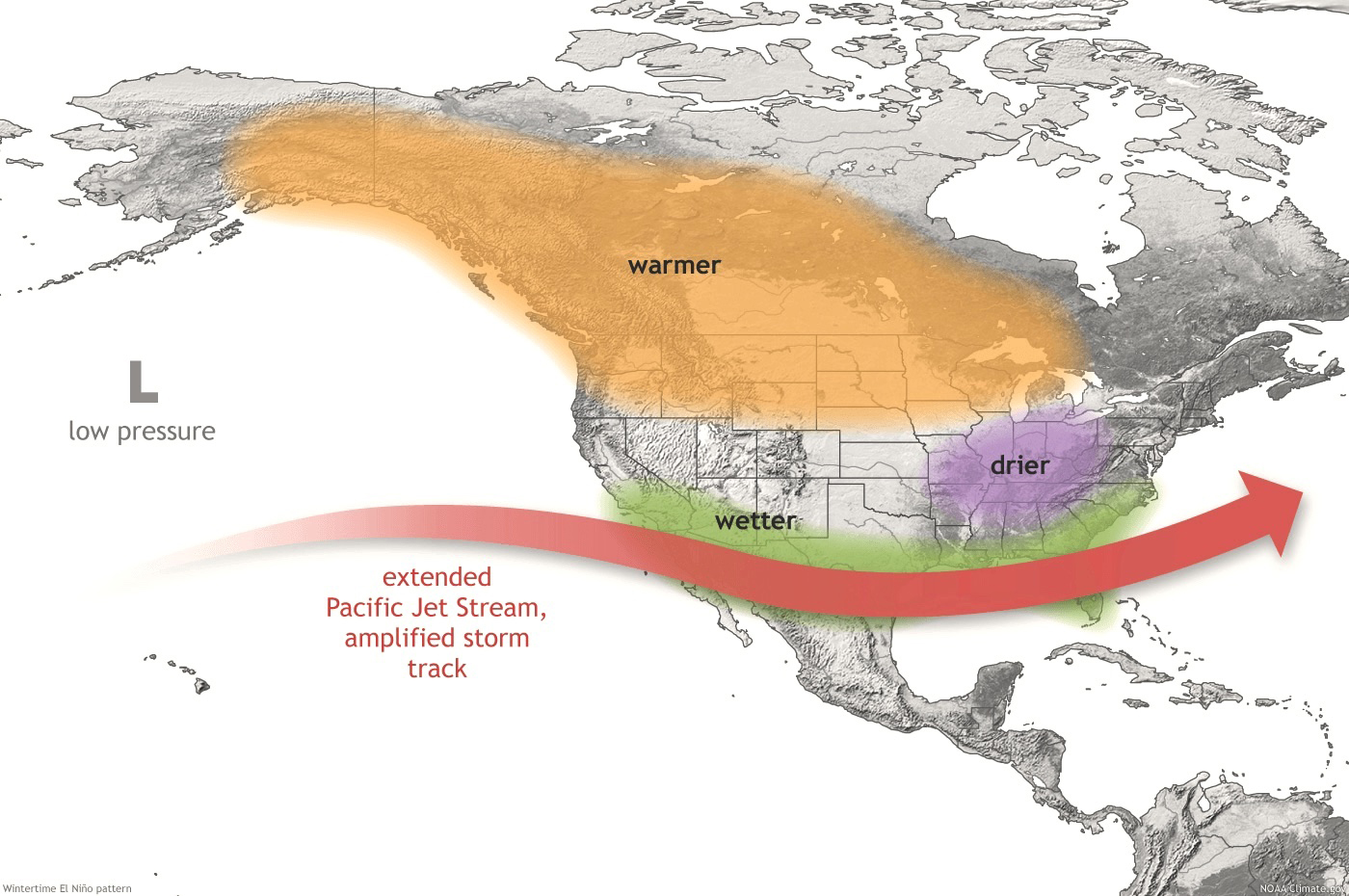
After a summer with record breaking heat, what kind of winter are we in for in Georgia? All signs point to an El Niño winter. But not just any El Niño, a Super El Niño. That might sound scary, but it simply means the type of weather patterns we are likely to see during an El Niño winter are even more likely to occur this year. And, of course, the weather we get in Georgia and across the US also has a big impact on our natural gas prices. So, how does an El Niño effect winter in Georgia? Let’s find out!
How El Niño Effects Winter in Georgia
Typically, an El Niño winter means cooler, wetter weather for us in Georgia. The effects may be stronger for those further south like Savannah. The weather shift occurs when warmer surface ocean temperatures warm the atmosphere. This shifts the jet stream across the US further south. Right now, the NOAA predicts a 33% chance we’ll actually be warmer than usual through winter. But, 33%-60% we’ll be wetter than normal moving through the state from northwest to southeast.
El Niño’s Severe Winter Weather for Georgia
During El Niño, we could also be in for some severe weather. During the last super El Niño in 2016-17, the southeast US had almost 100 tornadoes touch down. Georgia specifically experienced record warmth and significant flooding. In the 80s, a super El Niño gifted us with a decent amount of snow including a record 10 inches in March for Atlanta. Depending on how the super El Niño affects the polar vortex, it’s not out of the question for us to get severe ice storms as well.
El Niño Weather and Natural Gas Prices
Weather has a huge impact on natural gas suppliers and rates. So, what should we be on the lookout for this year? Cold snaps, not just in Georgia, but throughout the US, can drive prices up sharply. This doesn’t usually last long, but if it catches you at the wrong time, it can be costly.
On the other hand, a generally warmer winter across the US is likely to push our storage numbers up. This helps keep your rates and natural gas bills on the lower side.
Natural gas exports are still an unknown variable in the mix. We are exporting more already, and winter demand may drive exports even higher. If this drives overall storage numbers down, we’ll be less able to absorb big hits to supply from extreme weather events.
Right now, it’s hard to predict if winter natural gas rates will be volatile or stable. But with fall settling in, it’s a great time to compare natural gas plans before the winter. Check out the best natural gas rates today at https://www.georgiagassavings.com.